
Mattering
Just another piece with this title

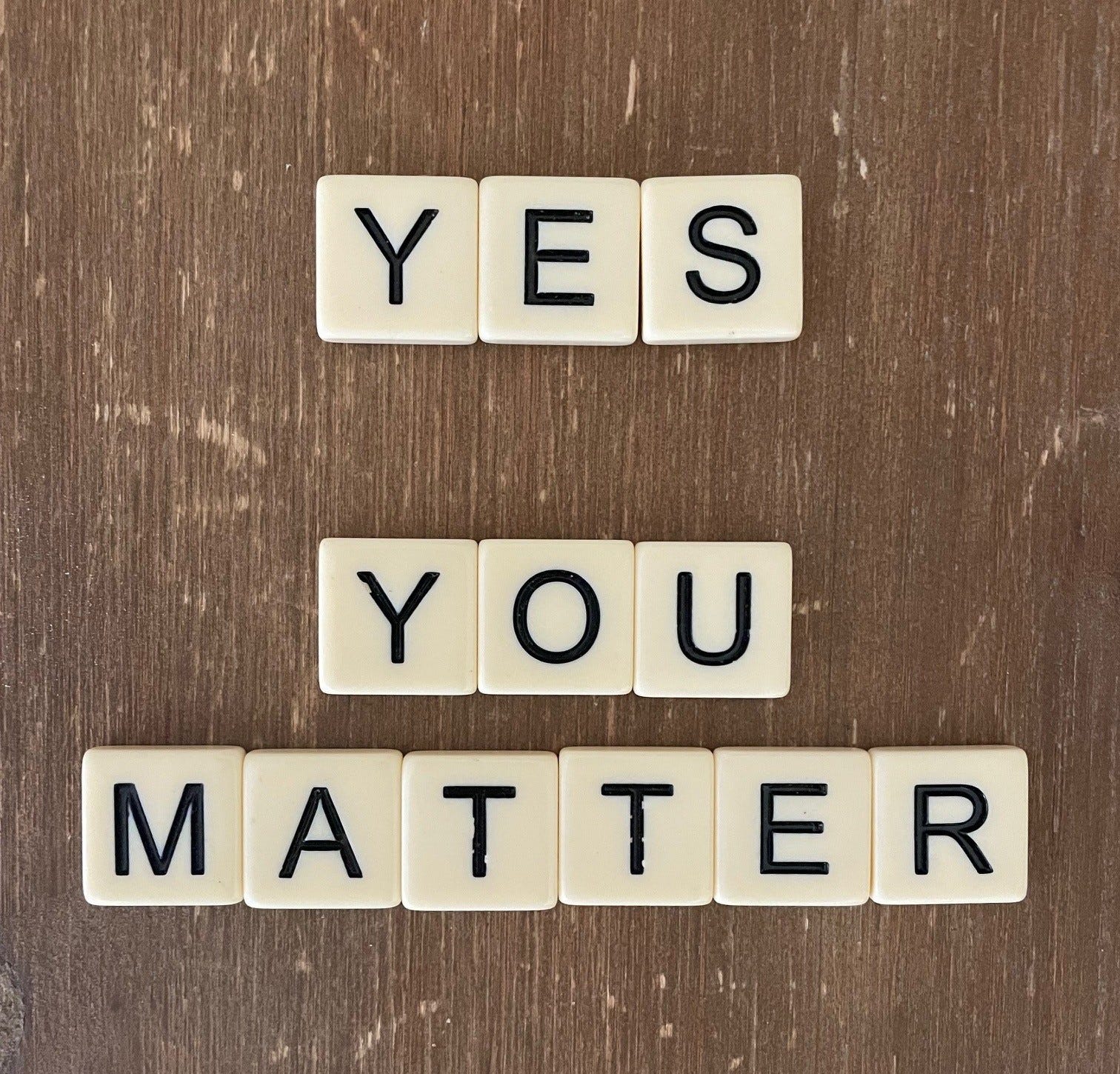
We all want to matter to others, right? We want our lives to make a positive difference in this often negative world. Late adulthood is a time in which we often look back over our working years, families, relationships, and volunteer activities and ask ourselves or perhaps discern evidence of how we mattered.
There are suddenly several books with mattering in the title: Mattering: The Secret to a Life of Deep Connection and Purpose by Jennifer Breheny Wallace, The Power of Mattering: How Leaders Can Create a Culture of Significance by Zach Mercuio, and The Mattering Instinct: How Our Deepest Longing Drives Us and Divides Us by Rebecca Newberger Goldstien all published within the last year. I decided to see what one of the books had to say.
I read Mattering: The Secret to a Life of Deep Connection and Purpose by Jennifer Breheny Wallace. It sounded like a book that might have some useful information on retirement and late adulthood; it did.
Wallace isolated five elements that she calls the mattering core: Recognition, Reliance, Importance, Ego Extension, and Attunement. In other words, if we feel our actions are valued, that others depend on us, prioritize us, invest in our well-being, and understand us we will know that we matter.
The book contains helpful advice and engaging stories about a variety of ways people have found to matter. I particularly enjoyed reading about Grandma Peggy, who routinely made a weekly breakfast at her home for a dozen or two high school students after her grandson once casually remarked, “My Grandma Peggy makes a better breakfast than this…you guys should really come over to her house instead.” Intergenerational relationships were formed as Peggy came to know the kids and they regularly got up early on Wednesday mornings to take pleasure in scrambled eggs and lots of bacon. Of course, it was not all about the breakfast but the community.
Peggy mattered to those students, and they mattered to her.
Wallace also puts a positive spin on responsibilities by pointing out that when others rely on us, we matter.
There’s a growing tendency in our culture to treat responsibility to others as an inconvenience, an obligation to dodge or delegate. In trying to guard against burnout or preserve autonomy, we can begin to see every task as a threat, like one more thing to manage rather than a sign that we matter. P. 40
The most interesting chapter, I thought, was on transitions, one of the most impactful being retirement.
She tells a story about a woman who was a scholar in psychology and had studied transitions. She had retired to Sarasota with her husband and found herself adjusting to two major transitions at the same time, retiring and moving. Shortly after arriving in Florida, she and her husband were invited to a dinner party with several retirees who all had impressive resumes. When asked what she planned to do with her newfound time, she said she’d like to do some consulting with nonprofits. She said, “I am just eager to get involved and see how I can contribute.” To her dismay, others at the party said they had had similar desires when they retired but no one was interested in their expertise. They felt unnecessary, useless, like they didn’t matter.
That is sad, and evidence of agism, but it’s also a reality.
Wallace writes,
When the job, the caregiving, or the parenting role no longer fills our days, do we stay anchored to that old identity, hoping to stretch its meaning into the next phase? Or do we need to let go of what was and build something new?…The challenge wasn’t to cling to what was; it was to ask, Where and how can I matter next? P. 148
Discovering how to matter in different ways will expand our identities. Yes, the job no longer defines who you are, but did it ever? We are far more than our work; we matter to family and friends more than we mattered to our workplaces.
Wallace has some significant insights. She gives positive examples of those who had looked outside of themselves and found that in doing so, they mattered. When we look outside of ourselves, we will also matter.
I believe that if we recognize, rely upon, prioritize, care about, and understand others, we will find ourselves mattering more and more. Perhaps that is the point of the book. Mattering is a bit like happiness. I substituted mattering for the word happiness in the following quote.
Mattering cannot be traveled to, owned, earned, worn or consumed. Mattering is the spiritual experience of living every minute with love, grace, and gratitude. Denis Waitly
Mattering is the spiritual outgrowth of treating others with love, grace, and gratitude. This guideline is applicable in every stage of life. Sometimes it’s not until late adulthood, when we begin to feel like we don’t matter, that we get to the core of why and how any of us matter.
As a Christian, I believe every individual matters because we have all been created in God’s image. He has a purpose for each one of us, and it will be accomplished.
For we are God’s handiwork, created in Christ Jesus to do good works, which God prepared in advance for us to do. Ephesians 2:10 NIV
Much of the advice in Wallace’s book is for behavior that was once commonplace. Folks needed each other, relied on friends and family, appreciated help, prioritized others, and understood that sometimes it wasn’t easy to assist another. But they did it. They knew that they mattered.
Books on mattering may be necessary in a culture in which many people have become a bit self-absorbed by staring at their phones and comparing themselves to others’ curated social media existences. Hopefully, we will begin to look around for opportunities to matter.
To close, I’ll quote from The Boy, the Mole, the Fox and the Horse: Inspiring Conversations on Hope, Love and Personal Growth by Charlie Mackesy,
Always remember you matter, you’re important and you are loved, and you bring to this world things that no one else can.
Truer words were never written.
Judy this is excellent post, filled with hope and a future! God has given me seeds to sow in many different forms. This year I plan to grow zinnias plus others seeds and plan to cut bouquets and give away to others ! Such a joy in giving.
Judy, you captured something many of us in this stage of life feel but don’t always articulate—the desire to still contribute and make a difference. I appreciated the reminder that mattering often grows when others rely on us. It reframes responsibility as a gift rather than a burden. Well spoken.